Foundation Inspection
Free, no-pressure evaluation with elevation readings and a written plan.
Every AlphaLift job starts the same way: a free foundation inspection, done by someone who repairs foundations for a living, not a commissioned salesperson working a quota. We measure, we look, and we tell you the truth about what we find, even when the truth is "your foundation is fine."
The inspection itself is methodical. We take elevation readings across your floors to map exactly how much movement has occurred and where. We walk the full exterior looking at brick lines, mortar joints, and separation at doors and windows. Inside, we check door operation, wall cracks, and floor slope. If it’s a pier & beam home, we go under it. You get the findings in writing, with photos, and a repair plan with an exact price, or a recommendation to simply monitor and re-check later.
Foundation problems in North Texas clay don’t get better on their own, but they also don’t always mean immediate repair. Knowing which situation you’re in is worth a free hour of your time, especially before you buy, sell, or renovate a home.
Our crew on the job
Real photos from recent AlphaLift jobs in Denton County. The same crew that will show up to your free inspection.
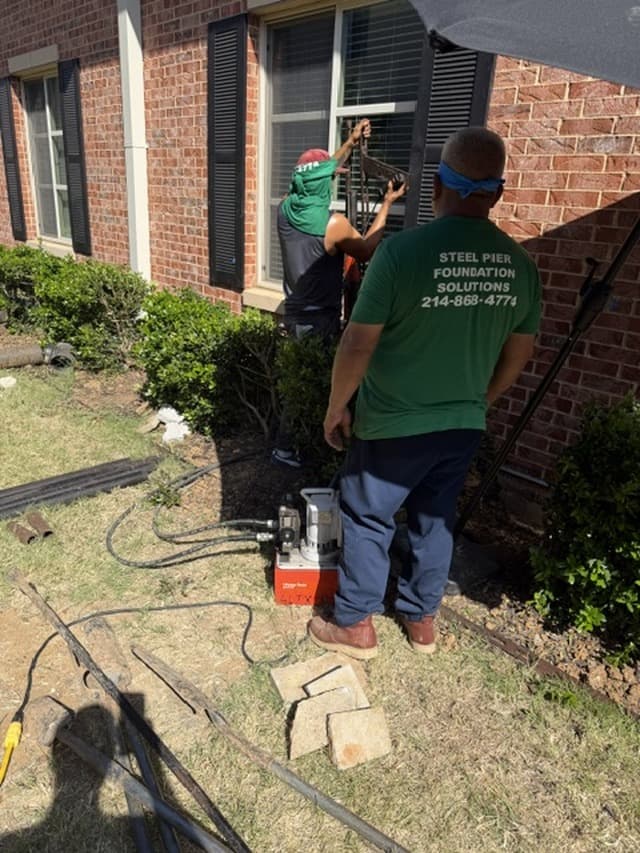
Driving a steel pier with the hydraulic ram
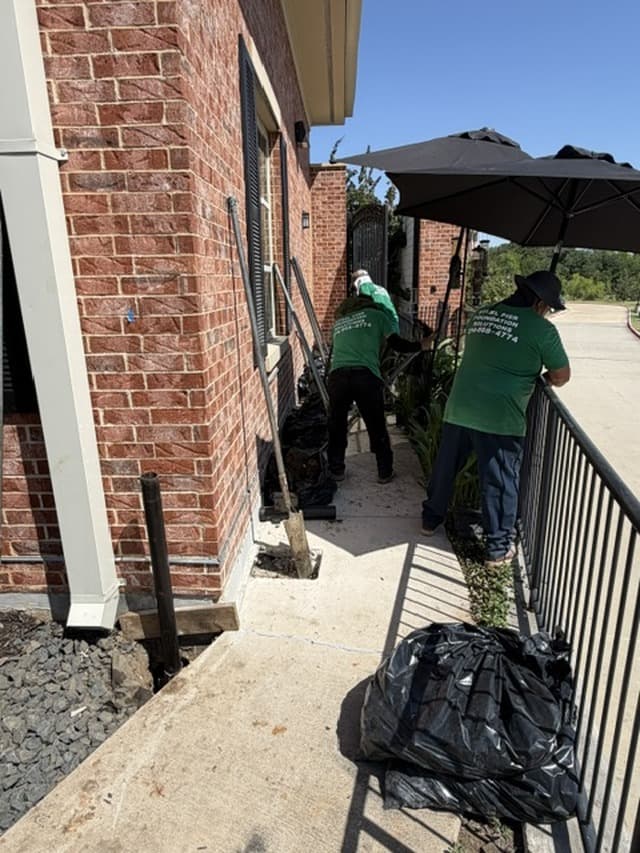
Crew working the perimeter of a slab foundation
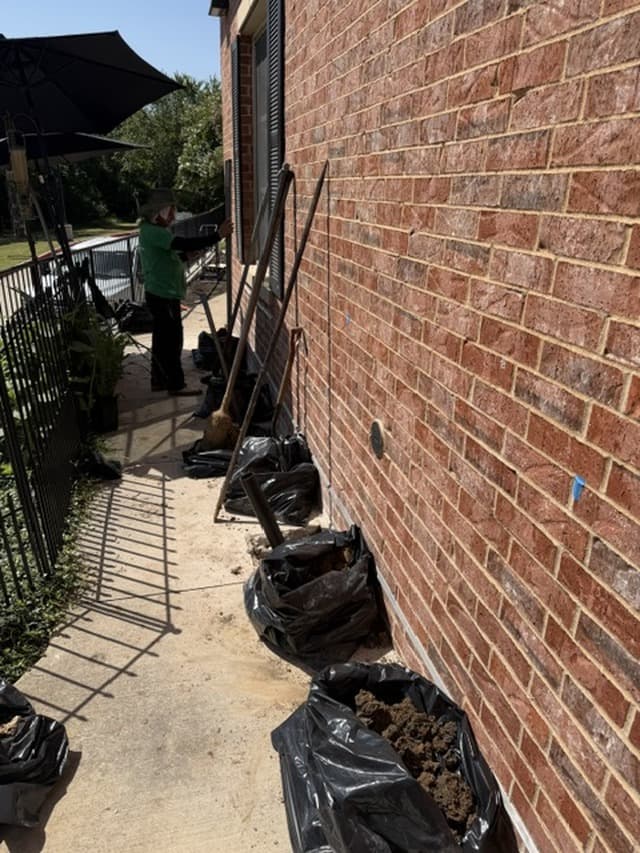
Pier holes hand-dug, soil bagged for cleanup
Common questions
Is the inspection really free?
Yes, no charge and no obligation. We inspect, measure, and give you a written assessment with photos. If repairs are warranted you get an exact quote; if they aren’t, we tell you that and suggest when to re-check.
How long does a foundation inspection take?
Plan on about 45 minutes to an hour for a typical home. Larger homes, pier & beam homes (where we go under the house), and homes with extensive symptoms can take a bit longer.
Should I get a foundation inspection before buying or selling a home?
Yes, in both directions. Buyers avoid inheriting a five-figure repair, and sellers avoid a surprise renegotiation during the option period. A documented inspection, and a transferable warranty if repairs were done, is a genuine selling point in North Texas, where buyers expect clay-soil movement.
What will the inspection tell me that I can’t see myself?
Elevation readings. Cracks and sticking doors tell you something changed, but the readings show how much the foundation has actually moved, where the low points are, and whether the pattern points to settlement, soil heave, or normal seasonal movement. That difference decides whether you need piers, or just monitoring.
Where we do this work
Allen · Argyle · Aubrey · Carrollton · Celina · Coppell · Corinth · Cross Roads · Denton · Farmers Branch · Flower Mound · Frisco · Garland · Grapevine · Hickory Creek · Highland Village · Irving · Krum · Lake Dallas · Lewisville · Little Elm · McKinney · Plano · Prosper · Richardson · Roanoke · Sanger · Southlake · The Colony